
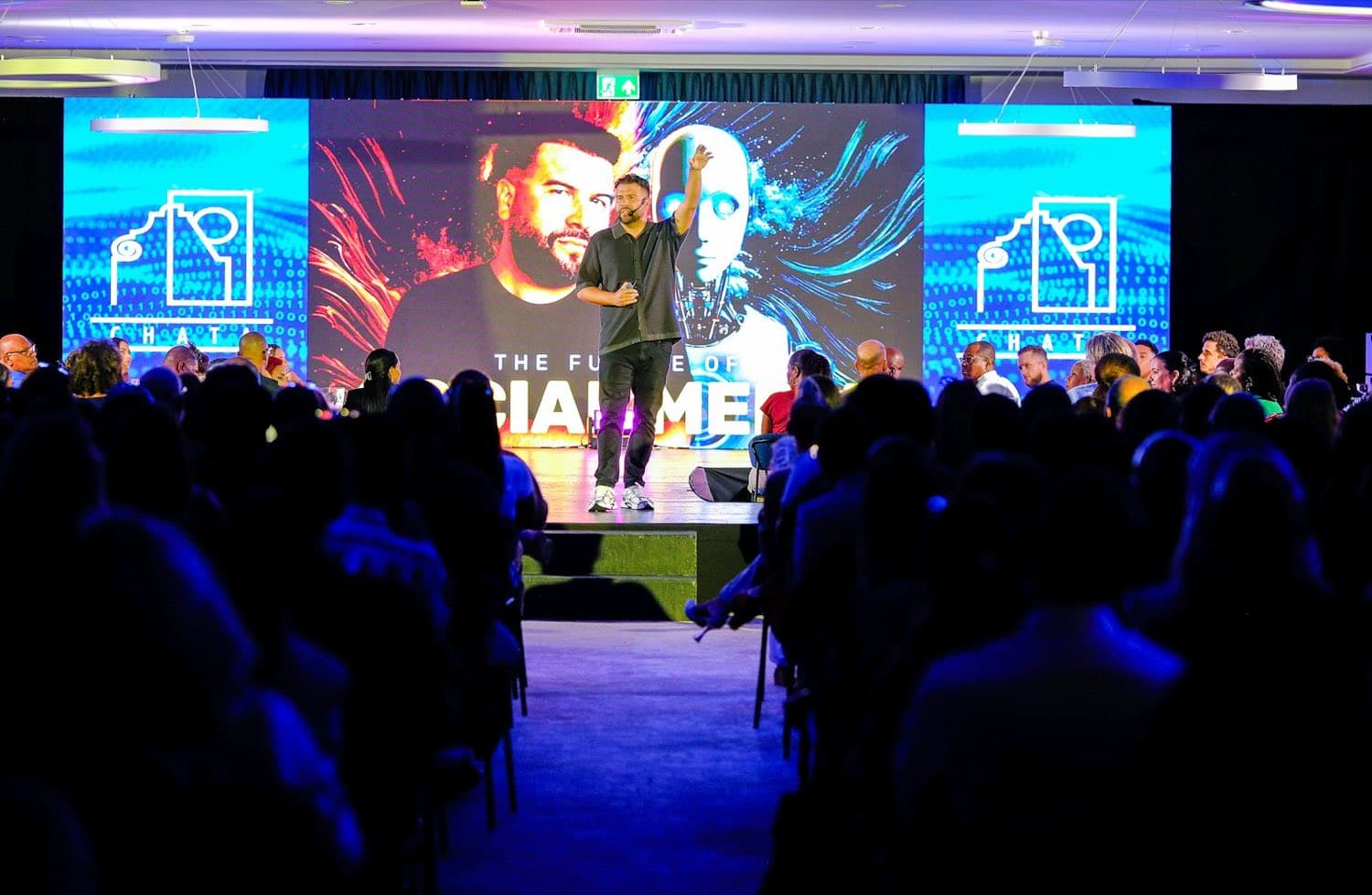
Search "AI conferences 2026" and you'll drown. There are hundreds of summits, expos, and "innovation forums" competing for your travel budget, and plenty of them are thin sales events with one decent keynote bolted on top. This guide cuts the list down to the AI conferences actually worth attending in 2026. Every date and location below is checked against the event's official site, ticket prices are included where they're public, and each entry tells you who the event is really for.
One note on timing. It's June, so a few of the year's biggest names have already wrapped. I've kept those in for context and marked them clearly. Most of this list is still ahead of you.
Three Kinds of AI Conference (Pick the Right Bucket First)
The single most common mistake is buying a ticket to the wrong type of event. AI conferences split into three rough buckets, and they barely overlap.
Research conferences are where new papers get presented: NeurIPS, ICML, ICLR, CVPR. The audience is PhD students, research scientists, and the labs hiring them. If you want to read the future six months early and recruit researchers, this is your bucket. If you came to sell software, you will be bored and broke.
Applied and industry conferences are about putting AI into production: NVIDIA GTC, Databricks Data + AI Summit, Ai4, World Summit AI. The audience is engineers, data leaders, and enterprise buyers. Expect product launches, case studies, and a big expo floor.
Founder, builder, and culture events sit closest to the startup world: AI Engineer World's Fair, The AI Conference, TED AI, Web Summit, and smaller invite-only gatherings. This is where you go to meet other builders, find investors, and feel where the puck is heading.
Decide which bucket you're in before you look at a single ticket price. A founder who lands at a paper-reading conference, or a researcher who pays four figures for a sales expo, both walk away disappointed.
Already Happened in 2026
NVIDIA GTC
March 16–19, 2026. San Jose Convention Center, San Jose, CA, USA
Often called the "Woodstock of AI," GTC is NVIDIA's flagship gathering and the closest thing the industry has to a state-of-the-union. The 2026 edition ran hundreds of sessions on generative AI, robotics, accelerated computing, and industrial digital twins. In-person passes ran roughly $2,200 to $2,500. GTC 2027 is already on the calendar for March 15–19 back in San Jose, so bookmark it now if you missed this year.
Who it's for: Engineers, ML practitioners, and anyone building on GPUs. Applied bucket, heavy on hardware and infrastructure.
ICLR
April 23–27, 2026. Rio de Janeiro, Brazil
The International Conference on Learning Representations is one of the top venues for deep learning research, and 2026 was its first time in South America. Expect cutting research on representation learning, foundation models, and training methods, presented by the people doing the work.
Who it's for: Researchers and grad students. Pure research bucket.

Tired of hunting for events?
Scouty is an AI event scout who monitors the web 24/7 and texts you on WhatsApp when he finds events matching your interests. No more checking 10 different platforms. Just tell him what you're looking for.
Chat with ScoutyStill Ahead in 2026
CVPR
June 3–7, 2026. Colorado Convention Center, Denver, CO, USA
Computer Vision and Pattern Recognition kicks off this week. It's the premier conference for computer vision research: object detection, generative image and video models, 3D reconstruction, and the vision side of multimodal AI. Non-member registration runs about $900 to $1,200.
Who it's for: Computer vision researchers and engineers. Research bucket, with a growing industry presence.
Databricks Data + AI Summit
June 15–18, 2026. Moscone Center, San Francisco, CA, USA
Four days, 700-plus sessions, and a crowd that skews heavily toward data engineering and applied ML. The full conference all-access pass is $1,895; a keynote and expo pass is $195 if you just want the announcements and the floor. Government, education, and nonprofit attendees get early-bird rates.
Who it's for: Data engineers, ML engineers, and data platform leaders. Applied bucket. If your AI work depends on a data pipeline, this is your event.
AI Engineer World's Fair
June 29 – July 2, 2026. Moscone West, San Francisco, CA, USA
The largest technical conference built specifically for the people shipping AI products, now in its fourth year. Ten parallel tracks, 400-plus sessions, and a room full of AI engineers, VPs of AI, and Fortune 500 CTOs. Tickets sell through Accelevents in tiers, with group discounts that start at 10% off for five or more.
Who it's for: AI engineers and technical founders building with LLMs and agents. The builder bucket at its most hands-on.
ICML
July 6–11, 2026. COEX Convention Center, Seoul, South Korea
ICML is one of the two most prestigious machine learning research conferences on earth, alongside NeurIPS. Registration started around $750, but be warned: as of late May the organizers flagged that the event is close to capacity and general tickets are running out faster than in past years. If you want in, don't wait.
Who it's for: Machine learning researchers. Research bucket, top tier.
Ai4
August 4–6, 2026. The Venetian, Las Vegas, NV, USA
Ai4 bills itself as North America's largest applied AI conference, with 12,000-plus attendees and tracks broken out by industry: financial services, healthcare, manufacturing, retail, government. The vibe is enterprise adoption rather than research. Check the official site for pass tiers and eligibility before you book.
Who it's for: Enterprise practitioners and decision-makers who want sector-specific case studies. Applied bucket.
The London AI Startup Conference
September 3, 2026. Google London, UK
A deliberate outlier on this list, and a good reminder that bigger isn't always better. This one is invite-only: roughly 120 AI founders, CTOs, and investors, selected from more than 2,000 applications, hosted at Google's London office. The whole point is signal over scale. Smaller, curated rooms like this often beat the mega-conferences for real conversations, which is exactly why getting into invite-only events is worth the effort.
Who it's for: Serious AI founders and investors who'd rather meet 30 relevant people than 30,000 strangers. Founder bucket.
The AI Conference
September 29 – October 1, 2026. Pier 48, San Francisco, CA, USA
A mid-size, independent event (2,500-plus attendees) that sits between the research and applied worlds. The programming leans toward frontier models, infrastructure, and what's actually working in production, with a speaker list pulled from the major labs and a strong founder turnout.
Who it's for: Founders, builders, and ML practitioners who want depth without a 20,000-person crush. Builder bucket.
World Summit AI
October 7–8, 2026. Taets Art & Event Park, Amsterdam, Netherlands
Europe's flagship applied-AI gathering, with 10,000-plus attendees, 300-plus speakers, and tracks spanning generative AI, scaling AI startups, and AI in regulated industries. Tickets start around €349, which makes it one of the better-value large conferences on this list. The Amsterdam setting and the cross-industry crowd make it a strong pick if you're based in Europe.
Who it's for: European practitioners, enterprise teams, and startups looking to scale. Applied bucket.
TED AI Vienna
October 28–30, 2026. Hofburg Palace, Vienna, Austria
The official TED conference on artificial intelligence, with 60-plus speakers across talks, workshops, panels, and curated dinners in a former imperial palace. This is the culture-and-ideas end of the spectrum: less "how to fine-tune a model," more "what AI means for how we live and work."
Who it's for: Leaders, thinkers, and the AI-curious who want the big picture rather than the implementation details. Culture bucket.
Web Summit
November 9–12, 2026. Lisbon, Portugal
Web Summit isn't AI-only, but AI dominates the agenda, and the sheer scale (70,000-plus attendees from 160-plus countries, 2,000-plus startups) makes it one of the best places on the planet to network. The flip side of that scale is noise. Come with a plan and a target list, or you'll spend four days walking and meet no one useful. Our broader roundup of the top tech conferences in 2026 goes deeper on Web Summit and its peers.
Who it's for: Founders raising money, anyone selling into Europe, and people who network well at scale. Founder and culture bucket.
NeurIPS
December 6–12, 2026. International Convention Centre, Sydney, Australia
The most prestigious AI research conference there is, and the year-ending event the whole field watches. NeurIPS 2026 heads to Sydney, with official satellite events in Atlanta and Paris for people who can't make the trip down under. Registration uses a lottery because demand outstrips capacity every year, so read the rules early.
Who it's for: Researchers, research-minded engineers, and labs recruiting talent. Research bucket, the summit of it.
AI Conferences 2026 at a Glance
| Conference | Dates | Location | Best for | Approx. cost |
|---|---|---|---|---|
| NVIDIA GTC | Mar 16–19 | San Jose | Applied / infra | ~$2,200–2,500 |
| ICLR | Apr 23–27 | Rio de Janeiro | Research | See site |
| CVPR | Jun 3–7 | Denver | CV research | ~$900–1,200 |
| Databricks Data + AI Summit | Jun 15–18 | San Francisco | Data + ML eng | $195–1,895 |
| AI Engineer World's Fair | Jun 29 – Jul 2 | San Francisco | AI engineers | See site |
| ICML | Jul 6–11 | Seoul | Research | from ~$750 |
| Ai4 | Aug 4–6 | Las Vegas | Enterprise applied | See site |
| London AI Startup Conf | Sep 3 | London | Founders (invite-only) | Application |
| The AI Conference | Sep 29 – Oct 1 | San Francisco | Builders | See site |
| World Summit AI | Oct 7–8 | Amsterdam | Applied (Europe) | from ~€349 |
| TED AI Vienna | Oct 28–30 | Vienna | Ideas / leaders | Application |
| Web Summit | Nov 9–12 | Lisbon | Founders / networking | See site |
| NeurIPS | Dec 6–12 | Sydney | Research | Lottery |
How to Decide if One Is Worth It
A flight, a hotel, three days off, and a four-figure ticket adds up fast. Before you commit, get specific about what a single conference needs to return to justify the spend: two warm intros to investors, one customer, a hire, a partnership. If you can't name the outcome, you're paying for FOMO.
The smaller events on this list often beat the giants on that math. A curated room of 120 founders gives you a real shot at meeting everyone who matters. A 70,000-person summit gives you sore feet and a stack of business cards you'll never follow up on. We wrote a full breakdown of how to decide whether a conference is worth the cost if you want the framework.
Don't Sleep on the Smaller AI Events Near You

Here's the thing the big-conference lists never tell you: most of the useful AI events happen between the headliners. Local meetups, lab demo days, hackathons, paper-reading groups, and one-off founder dinners are where you actually build relationships, and they cost nothing but an evening. The catch is they're scattered across Luma, Meetup, Partiful, university mailing lists, and Discord servers, so they're a pain to track. (If you want the full rundown of where events hide, see our guide to the best apps for discovering events.)
This is the gap Scouty was built for. Tell him you're into AI and machine learning, name your city, and he watches all those sources for you and pings you on WhatsApp when something relevant pops up. He'll catch the small Tuesday-night meetup near your office that no conference roundup will ever mention.
Frequently Asked Questions
What is the biggest AI conference in 2026?
By raw attendance, Web Summit in Lisbon (70,000-plus) is the largest event where AI dominates, and Ai4 in Las Vegas (12,000-plus) is the biggest dedicated applied-AI conference in North America. For research prestige rather than size, NeurIPS in Sydney is the one the field treats as the main stage.
Which AI conference is best for startup founders?
For raising money and meeting other builders, Web Summit and AI Engineer World's Fair are strong, and smaller invite-only events like the London AI Startup Conference punch well above their size. Founders usually get more out of curated, mid-size rooms than out of the 20,000-person research conferences.
Are AI conferences worth it in 2026?
They can be, if you go in with a specific goal and treat it like work rather than a perk. Name the outcome that would justify the cost before you book, build a target list of people to meet, and follow up within a week. If you can't articulate why you're going, skip it and put the money toward smaller local events instead.
How much do AI conference tickets cost in 2026?
It ranges enormously. A keynote-and-expo pass to Databricks Data + AI Summit is $195, World Summit AI starts around €349, research conferences like ICML start near $750, and premium applied events like NVIDIA GTC run past $2,000. Many academic conferences offer steep student rates, and several applied events have free or discounted passes for qualified attendees, so always check before paying full price.
What's the difference between NeurIPS, ICML, ICLR, and CVPR?
All four are top-tier academic AI research conferences, and they differ mainly by focus. ICML and NeurIPS cover machine learning broadly and carry the most prestige. ICLR centers on deep learning and representation learning. CVPR is the leading venue for computer vision. If you want the latest research and a chance to recruit or be recruited, these are the events to target.
Tired of digging through five sites to find the AI meetups and events near you? Tell Scouty what you're into and he'll send the ones worth your time, straight to WhatsApp.