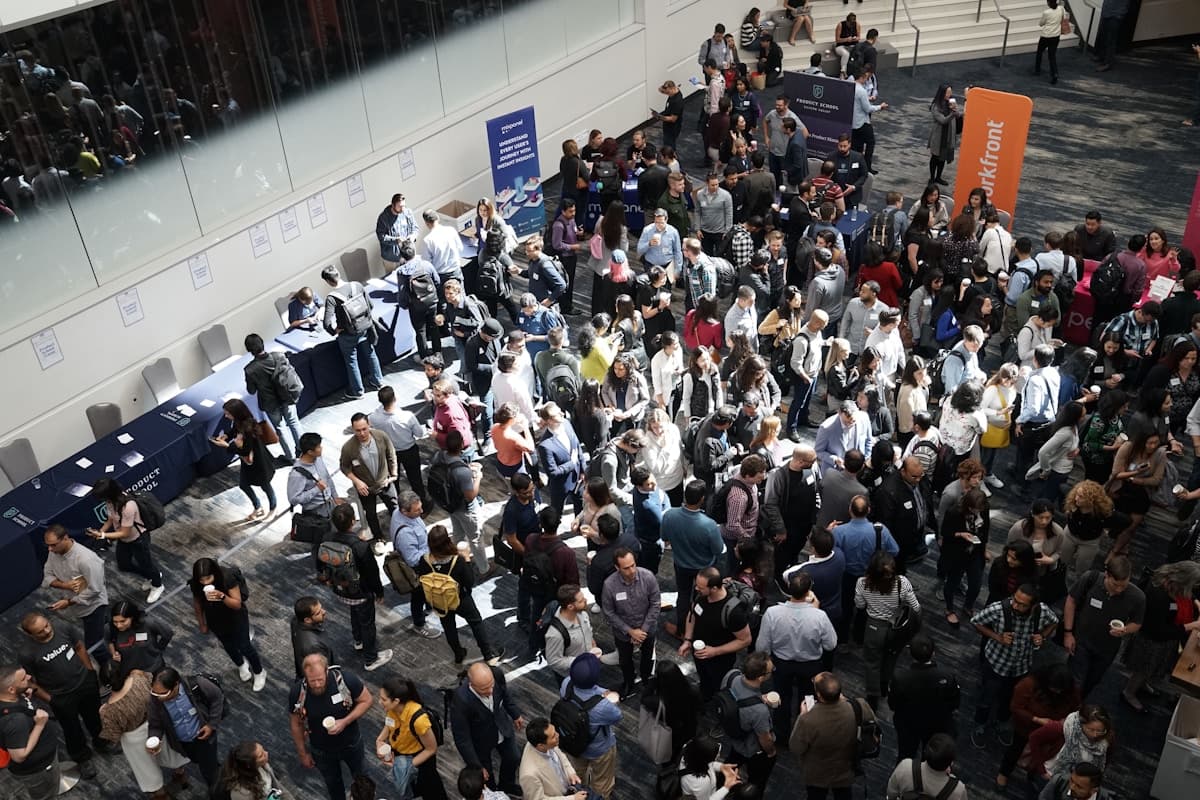
There are hundreds of events happening in your city every week: conferences, meetups, workshops, networking nights, open mics, hackathons, community gatherings, and more. The problem isn't that they don't exist. The problem is that they're scattered across so many different places that finding the right ones feels like a part-time job.
This guide covers every method for discovering local events, from the obvious platforms to the overlooked sources that most people miss. Whether you're new to a city, looking to expand your professional network, or just want to know what's happening this weekend, this is the complete playbook.
Why Finding Events Is So Hard
Before we get into solutions, it's worth understanding the root problem. Event discovery is fundamentally fragmented. A yoga studio lists on Eventbrite. A tech meetup uses Meetup.com. A local bar posts on Facebook. A startup founder puts their demo day on Luma. A community organization sends a newsletter. A coworking space puts a flyer in their lobby.
No single platform has every organizer. This isn't because the platforms are bad. It's because organizers choose where to list based on their audience, and different audiences live on different platforms. The result is that you need to check multiple sources to get a complete picture of what's happening around you.
This fragmentation is so persistent that it's been called one of the hardest problems in local discovery. Countless startups have tried to build "the one app for all events" and most have failed, because solving the supply side (getting every organizer to list) is nearly impossible.
So what do you do? You either check multiple sources, or you use a tool that does it for you. Here's how to do both.
1. Event Discovery Platforms
These are the big, dedicated platforms where organizers actively list their events. They should be your starting point.
Eventbrite
The largest general-purpose event platform. Eventbrite has millions of events across every category: concerts, workshops, food festivals, business conferences, fitness classes, and more. The search is good: filter by date, category, price (including free), and location.
Pro tip: Use the "Free" filter aggressively. There are far more free events on Eventbrite than most people realize: workshops, community events, networking sessions, and brand-sponsored experiences.
Limitation: Eventbrite is great when you know what you're looking for. It's weaker at surfacing events you didn't know to search for. The recommendations exist but they're broad and not deeply personalized.
Meetup
The best platform for recurring, community-driven events. Meetup is organized around groups: you join a group (like "San Francisco Hikers" or "London AI Developers") and get notified about their events.
Pro tip: Don't just search for events: search for groups. Joining the right groups means you'll automatically hear about relevant events for months or years to come, rather than doing one-off searches.
Limitation: Meetup is strong for community and hobby events but weak for conferences, one-off professional events, and anything that isn't run by a Meetup group. You're only seeing a slice of what's happening.
Luma
If you're in tech, startups, or VC, Luma is where your people are. It's the default event platform in the startup ecosystem: clean design, good RSVP experience, and a strong social layer that shows who in your network is attending.
Pro tip: Follow prolific event organizers on Luma. The platform's feed is driven by who you follow, so curating your follow list directly improves your discovery experience.
Limitation: Luma's catalog is almost entirely tech and startup events. If you're looking for anything else, you'll need to look elsewhere.
Facebook Events
Don't sleep on Facebook Events. Despite the platform's declining coolness factor, Facebook Events is still enormous for local discovery. Many small businesses, venues, restaurants, and community organizations post events exclusively on Facebook because that's where their audience is.
Pro tip: Use the "Events Near Me" feature and filter by "This Weekend" or "This Week." Also check the pages of local venues, bars, and community spaces you like: they often post events that don't surface in general search.
Limitation: Requires a Facebook account. The algorithm can be unpredictable, and professional events are underrepresented.
Tired of hunting for events?
Scouty is an AI event scout who monitors the web 24/7 and texts you on WhatsApp when he finds events matching your interests. No more checking 10 different platforms. Just tell him what you're looking for.
Chat with Scouty2. Social Media
Some of the best events are never formally listed on any event platform. They're shared as social media posts: an Instagram story, a LinkedIn update, a tweet, or a message in a Slack channel.
LinkedIn is increasingly becoming an event promotion channel, especially for professional and business events. Founders announce their startup's launch party. Conference organizers share speaker lineups. Local business groups post networking events.
Pro tip: Follow local community builders, coworking space accounts, and accelerator/incubator pages in your city. These accounts frequently share events that never make it to Eventbrite or Meetup.
According to recent data, 67% of 18-24 year olds use Instagram for local discovery. Many event organizers: especially in food, music, arts, and lifestyle: promote primarily or exclusively on Instagram.
Pro tip: Search location tags and local hashtags (like #TorontoEvents, #LondonTech, or #AustinThingsToDo). Follow local venue accounts. Check Instagram Stories, where many events are promoted.
Twitter/X
Less reliable for event discovery than it used to be, but still useful in tech circles. Many developer conferences, hackathons, and tech events are announced and discussed on Twitter first.
City-specific subreddits (r/toronto, r/london, r/seattle, etc.) often have weekly "what's happening" threads where community members share events. This is especially good for finding smaller, community-run events that don't have marketing budgets.
Discord and Slack Communities
Many cities now have local tech, startup, or professional communities on Discord or Slack. These channels often have dedicated #events channels where members share upcoming events. Ask around in your professional circle: you'd be surprised how many active local communities exist.
3. Local Media and Community Calendars
Don't overlook traditional and semi-traditional sources:
City Websites and Tourism Boards
Most cities maintain an official events calendar on their website or tourism board site. These tend to focus on larger events: festivals, public celebrations, cultural events: but they're a good source for things you won't find on tech-focused platforms.
Local Newspapers and Magazines
Many local publications maintain online event calendars. Weekly alternative newspapers (like NOW Magazine in Toronto or Time Out in London) are particularly good at curating interesting events across arts, food, music, and nightlife.
Libraries and Community Centers
Public libraries and community centers are quietly some of the best sources of free events. Author talks, workshops, skills classes, community meetings, cultural celebrations: libraries host an enormous variety of events that rarely make it onto mainstream platforms.
4. Coworking Spaces and Innovation Hubs

If you're a professional, entrepreneur, or freelancer, coworking spaces are event goldmines. Spaces like WeWork, local independent coworking hubs, and innovation centers host events constantly: networking nights, lunch-and-learns, demo days, workshops, and panel discussions.
Pro tip: You don't have to be a member to attend events at most coworking spaces. Follow their social media accounts and sign up for their email newsletters. Many events are open to the public and free to attend.
University innovation hubs, incubators, and accelerators are also excellent sources, especially for startup and tech events. They often host public demo days, speaker series, and networking events.
5. Word of Mouth and Your Network
Sometimes the simplest method is the most effective. Ask people.
- Ask colleagues what events they've been to recently
- Ask friends who seem to always know what's happening
- Join a local professional association or chamber of commerce
- Attend one event and ask people there about other events they recommend
The limitation is that your network only knows about events in their bubble. But the events they recommend tend to be higher quality because they come with a personal endorsement.
6. Newsletters and Email Lists
Many event curators run weekly or monthly newsletters that aggregate the best events in a city or niche:
- City-specific event newsletters. Many cities have indie newsletters that curate the best events each week. Search "[your city] events newsletter" to find them.
- Industry newsletters. If you're in tech, design, marketing, or another professional field, there are likely newsletters that include relevant events.
- Venue newsletters. Your favorite venues, galleries, theaters, and spaces likely have email lists. Sign up.
The advantage of newsletters is that they do the curation for you. The disadvantage is that they only cover what their curator knows about, which is inevitably a subset.
7. AI-Powered Event Discovery
This is the newest approach, and it directly addresses the core fragmentation problem.
Tools like Scouty use AI to continuously monitor sources across the web: event platforms, community sites, coworking spaces, social media, newsletters, and more: and proactively alert you when something matches your interests.
The model is different from a search engine or aggregator. Instead of you going to look for events, you describe what you care about in plain English ("startup pitch nights in my city," "free coding workshops," "AI conferences in North America") and the AI does the ongoing monitoring. When Scouty finds something matching your interests, he texts you on WhatsApp.
Why This Approach Works
The fragmentation problem is fundamentally about time and attention. There are too many sources to check manually. An AI that monitors them all and only surfaces what's relevant to you is a direct solution to that problem.
It's especially valuable if you have specific professional interests that span multiple platforms: for example, if you're a founder looking for pitch events, demo days, and investor networking nights, those events could be on Luma, Eventbrite, a coworking space website, or a startup community Slack channel. An AI agent can watch all of those places simultaneously.
When It's Not the Right Fit
AI-powered discovery is best for people who know what kinds of events they want. If you're in "show me everything fun this weekend" mode with no specific criteria, a general platform like Eventbrite or Facebook Events is still the better starting point.
Building Your Event Discovery System
The most effective approach combines multiple methods based on your needs:
For Professionals and Founders
- Luma for startup/tech events in your network
- Meetup for recurring professional groups
- LinkedIn for one-off professional events
- Coworking space newsletters for local professional events
- Scouty for automated monitoring of all sources
For General Local Discovery
- Eventbrite for the broadest general catalog
- Facebook Events for local venue and community events
- City event calendars for public events and festivals
- Instagram for food, arts, and lifestyle events
- Reddit/local community for hidden gems
For Specific Interests
- Meetup for finding dedicated groups
- Industry-specific newsletters for curated picks
- Scouty for automated monitoring across all platforms
Frequently Asked Questions
What is the best app to find local events?
There's no single best app because events are fragmented across platforms. For general browsing, Eventbrite has the largest catalog. For community groups, Meetup is best. For tech/startup events, Luma is the go-to. For local social events, Facebook Events is still massive. For automated discovery across all sources, Scouty monitors the web and sends you alerts via WhatsApp.
How can I find free events near me?
Use Eventbrite's "Free" filter to find free events in your area. Check Meetup, where most community events are free to attend. Browse Facebook Events in your area. Check your local library and community center websites, which host free events regularly. Public universities and coworking spaces also frequently host free events open to the public.
How do I find networking events in my city?
Search Meetup and Eventbrite for "networking" in your city. Check your local Chamber of Commerce calendar. Follow coworking spaces and startup incubators on social media. Join local professional groups on LinkedIn, Slack, or Discord. Or set up a trigger on Scouty for networking events in your area and let him find them for you.
How do I stay updated without checking every platform daily?
The most efficient approaches are: (1) subscribe to local event newsletters that do the curation for you, (2) join Meetup groups so you get automatic notifications, (3) follow key accounts on social media, and (4) use an AI event scout like Scouty that monitors multiple sources and only alerts you when something matches your interests.
Tired of checking five different apps? Chat with Scouty on WhatsApp: tell him what events you care about, and he'll do the hunting for you.